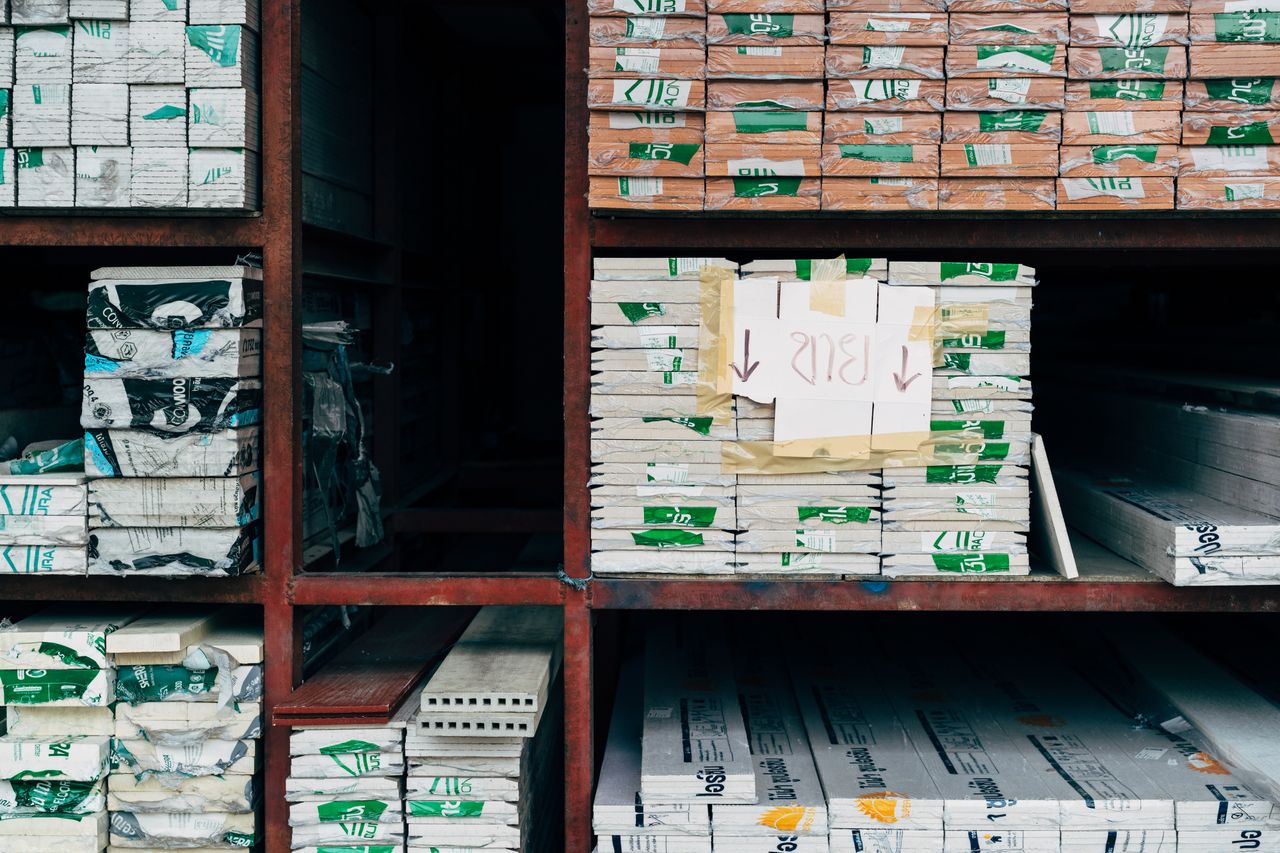
China supplies a large share of the world's tiles, steel products, sanitary ware, lighting and hardware. Importing them is different from importing consumer goods: the cargo is heavy, often fragile, sometimes oversized, and some products carry extra duties that can change the whole business case.
Plan by weight, not by volume
A 20ft container can carry roughly 25 to 28 tonnes on paper, but road weight limits at the destination often allow less once the truck and container are counted. Tiles, stone and steel hit that limit long before the container is full. That's why heavy materials usually ship in 20ft containers, and why the load plan has to be checked against the delivery route, not only the container rating.
| Cargo | Usual container | What limits the load |
|---|---|---|
| Ceramic and porcelain tiles | 20ft | Weight |
| Steel profiles, pipes, fasteners | 20ft, or flat rack for long lengths | Weight and length |
| Sanitary ware, lighting, fixtures | 40ft or 40ft high cube | Volume |
| Doors, windows, aluminium profiles | 40ft, open top for tall loads | Volume and length |
Packing that survives the trip
- Tiles should be boxed and strapped onto pallets, with corner protection and no overhang.
- Heavy items go on the container floor with the weight spread evenly, braced so they can't shift.
- All wooden crates, pallets and dunnage must be heat-treated or fumigated to the ISPM 15 standard and carry the stamp. Untreated wood can lead to the container being refused or fumigated at your cost.
Check the duties before you order
Many steel and aluminium products from China carry anti-dumping or countervailing duties in the US, EU and UK, on top of normal duty. These can be several times the product's value in some cases, and they apply to specific products and sometimes specific manufacturers. Before placing an order, confirm the HS code and check for these measures. We do this as part of every construction quote.
Paperwork you'll need
- Commercial invoice and packing list with weights per item
- Bill of lading
- Certificate of origin, where the destination needs it
- Product certificates for regulated items, for example CE marking for some construction products sold in the EU
Several suppliers, one container
A project often needs tiles from one factory, fittings from another and lighting from a third. Consolidating them at our warehouse into one container cuts the number of shipments and gives you one arrival date to plan the site work around.